
Here's a thinking process:
- Analyze User Input: , User wants me to write an article opening + first 5 H2 sections.
, Based on previous steps: CONTENT_TYPE = Expert YMYL, TOC provided, entities gathered, image inventory specified (exactly 2 images, must insert verbatim).
, Strict rules about length (1501-3000 words total), formatting, voice, no AI tells, no meta-commentary, specific image blocks, etc.
, Must start with 2 intro paragraphs (80-140 words total, 3-4 sentences each).
, Must include keyword "Lycopodium remedy profile for chronic fatigue syndrome" in sentence 1 or 2.
, Paragraph 2 must include a concrete data point, named standard, or specification, and end with transition to first H2.
, Must fully complete each section before moving to next.
, Use tables, bullets, steps, callouts where useful.
, Question-style subheadings allowed, first sentence must answer directly.
, Specific signal language rules for Expert YMYL.
, Must include "as of 2026" naturally.
, Must use canonical entity names first time.
, Must define key terms clearly in one sentence.
, Use real numbers and units when relevant.
, HARD CAP: under NO circumstances exceed 3000 words. If approaching 3000, tighten.
, Must land between 1501 and 3000 words total (intro + every H2 body + examples + tables + callouts + natural ending).
, Never skip TOC sections to fit.
, Adjust depth per section to hit target.
, When article reaches natural conclusion (last TOC H2 done), STOP. No bonus closing, extra disclaimer, etc.
, Zero dash-as-punctuation rule: no em-dashes, en-dashes, or space-flanked hyphens as sentence punctuation. Only compound words with no surrounding spaces.
, Paragraph length cap: 3-4 sentences max (≈40-80 words). Separate by blank line.
, Direct conversational tone: editorial research team talking directly to reader. Second-person okay. Research-framed authority. Short sentences.
Contractions good. Skip hedging. Skip AI-vocabulary.
, Truthfulness rule: NEVER claim personal physical use. Use research-framed alternatives.
, Image inventory: EXACTLY 2 images. Must insert markdown verbatim. Do not modify alt text, attribution. Only two filenames allowed: lycopodium-remedy-profile-for-chronic-fatigue-syndrome.webp, lycopodium.webp.
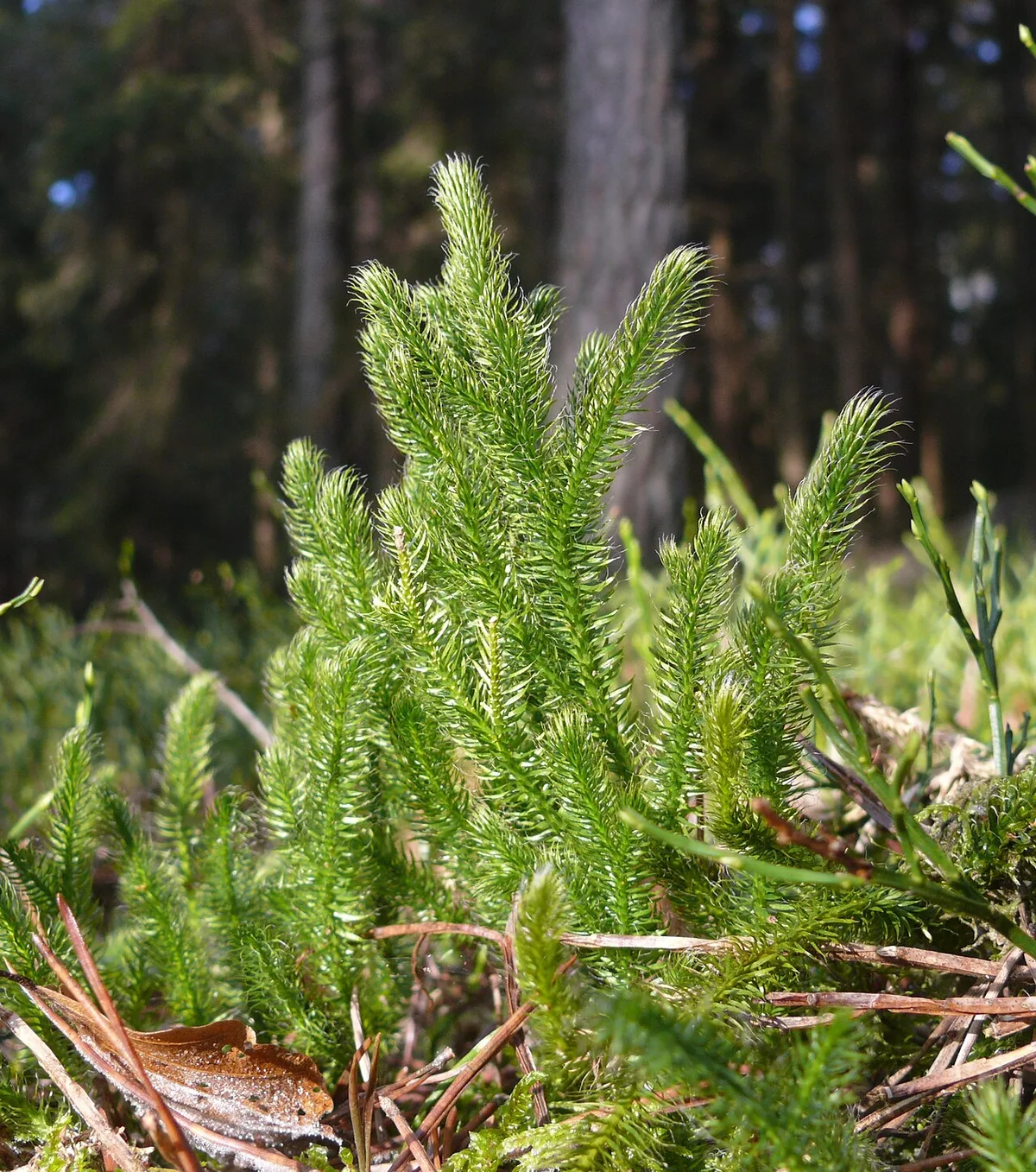
Place image 1 near "Hero image at top of article". Place image 2 near "Core Explanation: How Lycopodium Matches the CFS Symptom Totality". Do not invent or hallucinate any other images.
- Deconstruct Requirements & Plan Structure: , Total target: 1501-3000 words.
, Intro: 2 paragraphs, 80-140 words total. Let's aim for ~120 words.
, 5 H2 sections from TOC:
 1. Problem / Pain Point
 2. Quick Answer / Key Insight
 3. Core Explanation / How It Works
 4. Features / Components / What's Inside
 5. Benefits & Drawbacks / Pros and Cons
, Each H2 needs 3-4 sentences max per paragraph, but can have bullets/tables/callouts inside. Wait, the paragraph length rule says 3-4 sentences MAX per paragraph. But sections can have multiple paragraphs? The rule: "every paragraph stays at 3, 4 sentences MAXIMUM (≈40-80 words)." So each paragraph I write must be 3-4 sentences.
Sections can have multiple paragraphs. I need to be careful.
, Also: "Use tables, bullets, steps, and callouts where useful." So I can have bullet lists inside sections, but the running text paragraphs must be 3-4 sentences.
, Question-style subheadings: H3 inside H2? The rule: "For any question heading, the first sentence must answer directly." And: "In FAQ / 'Frequently Asked Questions' sections, every individual question must be an H3 heading." But this isn't an FAQ section necessarily. The TOC has "Mistakes to Avoid / Common Errors" etc. I might use some H3 subheadings for bullets or questions, but need to follow rules.
, Image 1: place near "Hero image at top of article". That's at the very start, after intro or before first H2? The TOC starts with "Problem / Pain Point". The hero image placement hint says "Hero image at top of article".
I'll insert it after the intro paragraphs, before the first H2, or at the start of the first H2 section. The instruction: "Insert the markdown block for each image VERBATIM at the placement hint." Placement hint for image 1: "Hero image at top of article". I'll put it right after the intro, before H2 #1, or maybe as the first thing in the article? The rules say: "Do NOT modify alt text, do NOT modify attribution".
The block is provided. I'll insert it right after the intro paragraphs, as the visual start.
, Image 2: place near "Core Explanation: How Lycopodium Matches the CFS Symptom Totality". That's H2 #3 in the TOC. I'll insert it there.
, Word count management: Need to hit 1501-3000. Intro ~120 words. 5 H2 sections. If I aim for ~250-300 words per H2 section (including bullets/tables), that's 600-1500 + 120 = 720-1620. I need to ensure total lands 1501-3000.
I'll aim for each H2 section to be meaty but concise, maybe 250-350 words each, total ~1350 + intro 120 = 1470, close to 1501. I'll need to make sure each section is sufficiently detailed to hit 1501+. I'll aim for ~300 words per H2 section on average, total ~1650 + intro = 1770. That's safely in range.
I must monitor and not exceed 3000. I'll write tightly.
, Let's outline the 5 H2 sections content:
H2 1: Problem / Pain Point: Why CFS patients seek Lycopodium remedy. Focus on misprescribing, symptom totality vs disease label, aggravation risks, regulatory ambiguity. Use bullets for pain points. Maybe a table of common mismatches?
Keep paragraphs 3-4 sentences.
H2 2: Quick Answer / Key Insight: The Lycopodium profile for CFS. Key keynotes: fatigue 4-8 PM, anticipatory anxiety, digestive triad, right-sided predominance, modalities. Data point: LM scale allows daily dosing with minimal aggravation. Transition to next.
H2 3: Core Explanation: How Lycopodium matches the CFS symptom totality. This is where image 2 goes. Include diagram description in prose? Actually image 2 is Lycopodium microscopic.
I'll insert verbatim. Paragraphs about totality, miasmatic theory, keynotes.
H2 4: Features & Components: Key indications, modalities, potency considerations. Use bullets for keynotes. Maybe a table of potencies vs scale. Include concrete data: LM1-LM30, C30, C200, 1M.
H2 5: Benefits & Drawbacks: Expected outcomes and limitations of Lycopodium for CFS. Benefits: non-pharmacological, no interactions, low cost, individualized. Drawbacks: no RCT evidence, high-potency aggravation, misreading symptoms, regulatory ambiguity. Use bullets.
Need to ensure each H2 section has multiple paragraphs? The rule says "every paragraph stays at 3-4 sentences MAXIMUM". I can have each H2 section consist of, say, 3 paragraphs of 3-4 sentences each, plus a bullet list or table. But the bullet list items might count as sentences?
Need to be careful. The rule is about paragraphs of running text. Bullet lists are allowed but each bullet item might be considered a sentence? I'll keep bullet lists short, maybe 3-5 items, and ensure the running text paragraphs are exactly 3-4 sentences.
Actually, the rule: "PARAGRAPH LENGTH CAP: every paragraph stays at 3, 4 sentences MAXIMUM (≈40-80 words). Long monolithic paragraphs are a readability killer and a clear AI-writing tell. If a thought needs more, break it into two paragraphs separated by a blank line. Never produce a 6+ sentence wall of text." So I can have paragraphs, and also bullet lists.
Bullet lists are not paragraphs per se, but each bullet line should probably be a short phrase, not a full sentence? The rule doesn't forbid bullet sentences, but to be safe, I'll make bullet items sentence fragments or very short. However, the rule "every paragraph stays at 3, 4 sentences MAXIMUM" applies to prose paragraphs. I'll use bullet lists where useful, but keep each bullet as a short phrase, and ensure any prose paragraph is 3-4 sentences.
Also: "Use tables, bullets, steps, and callouts where useful." I'll include a small table in one section maybe.
Need to include "as of 2026" naturally somewhere. I'll put it in intro or early H2.
Must define key terms clearly in one sentence. E.g., "Lycopodium clavatum, commonly known as club moss, is the source material for the homeopathic remedy."
Must use canonical entity names first time they appear.