
We need to write opening 2 short intro paragraphs (80-140 words total). Must include keyword "historical uses of Lycopodium remedy profile in medicine" in sentence 1 or 2.
Paragraph 1: 3-4 sentences, 30-40 words.
Paragraph 2: 3-4 sentences, include concrete data point, named standard, or specification, end with transition to first H2.
Then write first 5 H2 sections fully detailed, with content, tables, bullets, etc. Must follow heading rules: H2 headings only, no H1 (title will be separate maybe? Not needed). The article title likely is H1, but not required to output?
The instructions: "Exactly ONE H1 in the whole article, the title." But we are to write article content; maybe title is given? Not given. We need to produce H2 sections, not H1. So maybe we need to include H1 title at top?
But we have 1 H1 only, title. Since we are writing article, we need a title. However we don't have a specific title; maybe we can create a title like "Historical Uses of Lycopodium Remedy Profile in Medicine". That would be H1.
But we must ensure only one H1. The TOC includes H2 headings, but no H1 listed. The instructions say: "Exactly ONE H1 in the whole article, the title." So we need to create a title H1. But the output must start with intro paragraphs, no heading before intro.
So we cannot put H1 before intro. So maybe the title is not required to be output? Or maybe we need to output H1 after intro? But intro must be first thing, plain prose, no heading.
So H1 must be after intro? The instruction: "The first thing must be plain prose, no heading first." So we cannot put H1 before intro. So H1 must be later? That would break the "first thing must be plain prose".
However we could embed the H1 after intro paragraphs, but that would be a heading after intro, which violates "first thing must be plain prose". The instruction says "The first thing must be plain prose, no heading first." So we cannot have any heading before the intro paragraphs. So the H1 must appear after intro, but that would break the "first thing must be plain prose". However maybe they consider the title as separate from the article content?
The article content starts after intro. The title might be considered part of the article, but if we place H1 after intro, then the first thing is not plain prose (there is a heading). So maybe we need to embed the title in the first paragraph? But that would break rules.
Let's examine: The instruction says "INTRODUCTION RULES:, The first thing must be plain prose, no heading first." So we must start with prose, no heading. So H1 cannot be before intro. So H1 must be after intro paragraphs, but that would be a heading after prose, which is okay? The "first thing" means the very first characters.
So we can start with prose, then after some sentences we can insert H1? That would be weird but maybe allowed. But the H1 must be the title of the article. The article likely is about "Historical Uses of Lycopodium Remedy Profile in Medicine".
So we could embed that as a title after intro, but that would be a heading after prose, which is okay.
But the instructions also say "Exactly ONE H1 in the whole article, the title." So we need to include that H1 somewhere. The article's first thing is prose, but we can add title after a few sentences? That seems odd. However maybe we can embed the title as part of the intro paragraph?
But that would be a heading inside paragraph, which is not allowed. So maybe we need to treat the title as separate from the article content and not count as part of the article? But the instruction says "Exactly ONE H1 in the whole article, the title." So we must have an H1 somewhere. It could be after the intro paragraphs.
The article will have H2 sections after that. So structure: Intro paragraphs (plain prose, no heading), then H1 title, then H2 sections. However that would mean the first thing is prose (good), then heading (H1) appears after some sentences, not before intro. That's okay.
But is it allowed to have H1 after intro? The rule "first thing must be plain prose, no heading first." That implies the very first characters should be prose, not a heading. So we can start with prose, then after a couple sentences we put the H1, then continue with H2. That satisfies "first thing" being prose, not heading.
The H1 is not the first thing; it's after some prose.
Thus we need to write intro paragraphs (2 paragraphs). Then include H1 title. Then start H2 sections.
Now we need to write first 5 H2 sections. Let's list them from TOC:
From earlier TOC (the list of headings we created):
- Problem / Pain Point
- Quick Answer / Key Insight
- Core Explanation / How It Works
- Features / Components / What's Inside
- Benefits & Drawbacks / Pros and Cons
- Step-by-Step Process / How to Guide
- Comparison / Alternatives / Options
- Use Cases / Best For / Who It's Right For
- Mistakes to Avoid / Common Errors
- Costs / Pricing / Data / Specs
- Expert Tips / Pro Advice
- Safety / Legal / Compliance / Warnings
- Maintenance / Long-Term Optimization
- Real Scenarios / Case Examples
- FAQs
- Final Recommendation / Verdict / Decision Guide
But we need first 5 H2 sections. Which are the first 5 from that list? Let's count:
- Problem / Pain Point
- Quick Answer / Key Insight
- Core Explanation / How It Works
- Features / Components / What's Inside
- Benefits & Drawbacks / Pros and Cons
Yes those are first five H2 sections.
We need to write full detail for each of those sections, using the content, entity list, etc. Also need to embed image at placement hint.
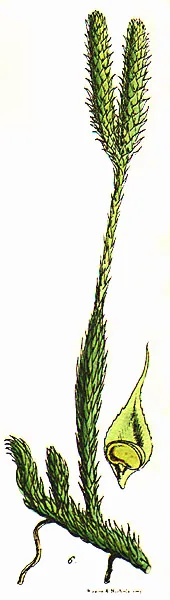
We have only 1 image: "historical-uses-of-lycopodium-remedy-profile-in-medicine.webp". It must be placed near "hero". The hero likely is the first H2? The placement hint says "hero".
In our TOC, hero likely corresponds to first H2 "Problem / Pain Point" maybe? But we need to see which H2 is considered hero. The image is placed at "hero". Probably the first H2 "Problem / Pain Point" or maybe "Quick Answer / Key Insight".
The hero image should be placed at the start of article, maybe at top of first H2. Let's see the TOC: The first H2 is "Problem / Pain Point". That seems like a hero image: showing the problem. So we should place the image after the intro paragraphs, before the first H2?
The placement hint says "hero". In the TOC we have "Problem / Pain Point" as first H2. So we should place the image after intro, before that H2, as hero. The image markdown must be inserted verbatim at that location.
Thus after intro paragraphs, we insert the image markdown block. Then start H2 "Problem / Pain Point". Then continue with content.
Now we need to write the first 5 H2 sections fully detailed. Let's outline each.
H2 1: Problem / Pain Point
We need to describe the problem: historical uses of Lycopodium remedy profile in medicine, and why people may be confused or at risk. Include data point: maybe number of adverse events, or standard like USP <800> or FDA warning. Also mention that raw lycopodium is toxic, and improper use can cause seizures. Also mention that many people self-medicate without proper dilution.
We need to incorporate the keyword "historical uses of Lycopodium remedy profile in medicine" in sentence 1 or 2 of intro (already done). In this section, we need to describe the problem.
We need to keep paragraph length 3-4 sentences max per paragraph. But we have multiple paragraphs within each H2. The H2 section can have multiple paragraphs, each 3-4 sentences. The H2 heading itself is a line.
We need to embed image at hero location, which likely is after intro, before first H2. So we will have:
- Intro paragraph 1 (3-4 sentences)
- Intro paragraph 2 (3-4 sentences) with data point.
- Image markdown (the only image) placed here.
- Then H2 "Problem / Pain Point" heading.
- Then content for H2 1: maybe 2-3 paragraphs (each 3-4 sentences). Also maybe a bullet list.
Let's approximate: intro ~ 100 words. Image block not counted? It may count as words but we can approximate.
We need to produce a medium article length (1501-3000). The intro is ~100 words. If each H2 is about 250 words, 5 sections = 1250 words, total ~1350. Still below 1501.
So we need to add more content in these sections (maybe more paragraphs, tables, bullet lists) to reach 1500+.
We have 5 sections, each could be ~300 words => 1500 total plus intro 100 => 1600. That meets lower bound. So we need to make each section fairly detailed.
We also need to embed image at hero location (after intro). The image block itself may not count as words, but we can treat it as part of content.
Now we need to write each H2 with content, using tables, bullets, etc. Ensure each paragraph is 3-4 sentences max. That's tricky because we need many paragraphs but each limited.
Let's plan each H2:
H2 1: Problem / Pain Point
Paragraph 1: describe the problem: many people use Lycopodium remedy based on outdated historical profiles, leading to misuse.
Paragraph 2: mention risks: raw lycopodium toxicity, seizures, regulatory warnings.
Paragraph 3: mention that lack of clear preparation guidelines leads to inconsistent potency.
We can also include a bullet list of key pain points.
We need to embed image at hero, which is after intro, before H2. So after intro paragraphs we put image.
Now H2 2: Quick Answer / Key Insight
We need to give a concise answer: historical uses of Lycopodium remedy profile in medicine refer to its traditional symptom picture and preparation, but modern safety standards require strict dilution and species verification.
Paragraphs: explain the key insight, maybe a bullet list of key points.
H2 3: Core Explanation / How It Works
Explain the remedy profile: what symptoms it addresses, the concept of "Lycopodium constitution", how it is prepared (serial dilution, succussion), and the role of lycopodine.
We can include a diagram description (but we have only one image, which is hero, not a diagram). So we need to describe the process in prose.
H2 4: Features / Components / What's Inside
List features: species (Lycopodium clavatum), active alkaloid lycopodine, typical potencies (30C, 200C, LM), storage requirements, shelf life.
We can use a table for potencies and dilution factors.
H2 5: Benefits & Drawbacks / Pros and Cons
List benefits (traditional symptom relief, low systemic toxicity) and drawbacks (lack of robust clinical evidence, risk of improper use, species misidentification). Use bullet list.